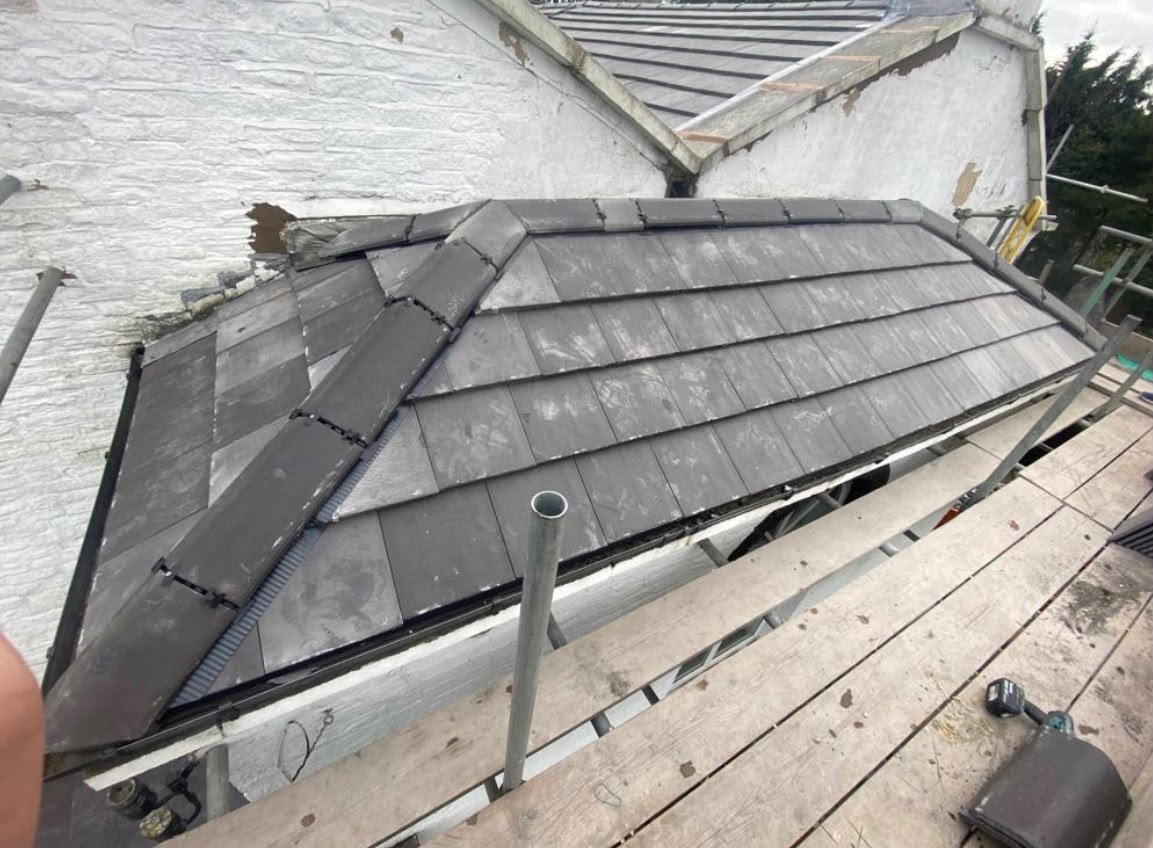
Dry ridge systems
A dry ridge system replaces wet mortar bedding with a mechanical fixing kit, typically comprising a ridge roll (breathable, self-adhesive union between ridge and tile), a batten fixed along the ridge line, and stainless steel screws that anchor each ridge tile down through the ridge roll into the batten. The result is a mechanically secured ridge that satisfies the wind-uplift requirements of BS 5534, provides continuous ventilation at the apex, and needs no re-pointing. Dry ridge is the default modern solution and works with virtually every tile profile in common use across North Yorkshire.
Mortar-bedded ridges (done to Standard)
For period cottages, stone properties and listed or conservation-area buildings where the visible mortar joint is expected, mortar bedding remains appropriate, but it must now be paired with mechanical fixing to satisfy BS 5534. We bed ridge tiles on a strong 3:1 sand and cement mix with plasticiser, form clean neat joints, and mechanically fix each ridge tile with a stainless steel screw or clip so the assembly is compliant. Pure mortar-only bedding, with no mechanical fixing, has not met the Standard since 2015.
Ventilation & condensation control
Modern insulated roofs generate warm, moist air that must escape at the ridge to prevent condensation. A dry ridge system provides continuous high-level ventilation as standard. On mortar-bedded roofs we specify additional ridge vents at appropriate intervals. Skipping this step doesn't just risk condensation, it shortens the life of every timber in the roof structure.
Ridge repair vs full re-ridge
One or two loose ridge tiles after a storm can be individually re-bedded and mechanically fixed. But if the mortar is cracking down the length of a ridge, or the ridge has been previously bedded without mechanical fixing, the correct fix is to lift the entire run, replace the underlying ridge roll or bedding, and re-fix compliantly. Patching a non-compliant ridge leaves the rest of the run at the same risk of failure, usually in the next storm.
Local exposure, why this matters in North Yorkshire
Properties across York, Thirsk, Ripon, Malton and the surrounding villages sit in a wind-loading zone where BS 5534 mechanical fixing requirements are enforced strictly. Older mortar-bedded ridges frequently fail here after strong easterlies or storm systems moving off the North Sea. If your property is exposed, on a ridge line, or in open countryside, mechanical fixing isn't optional.