Materials & systems we install
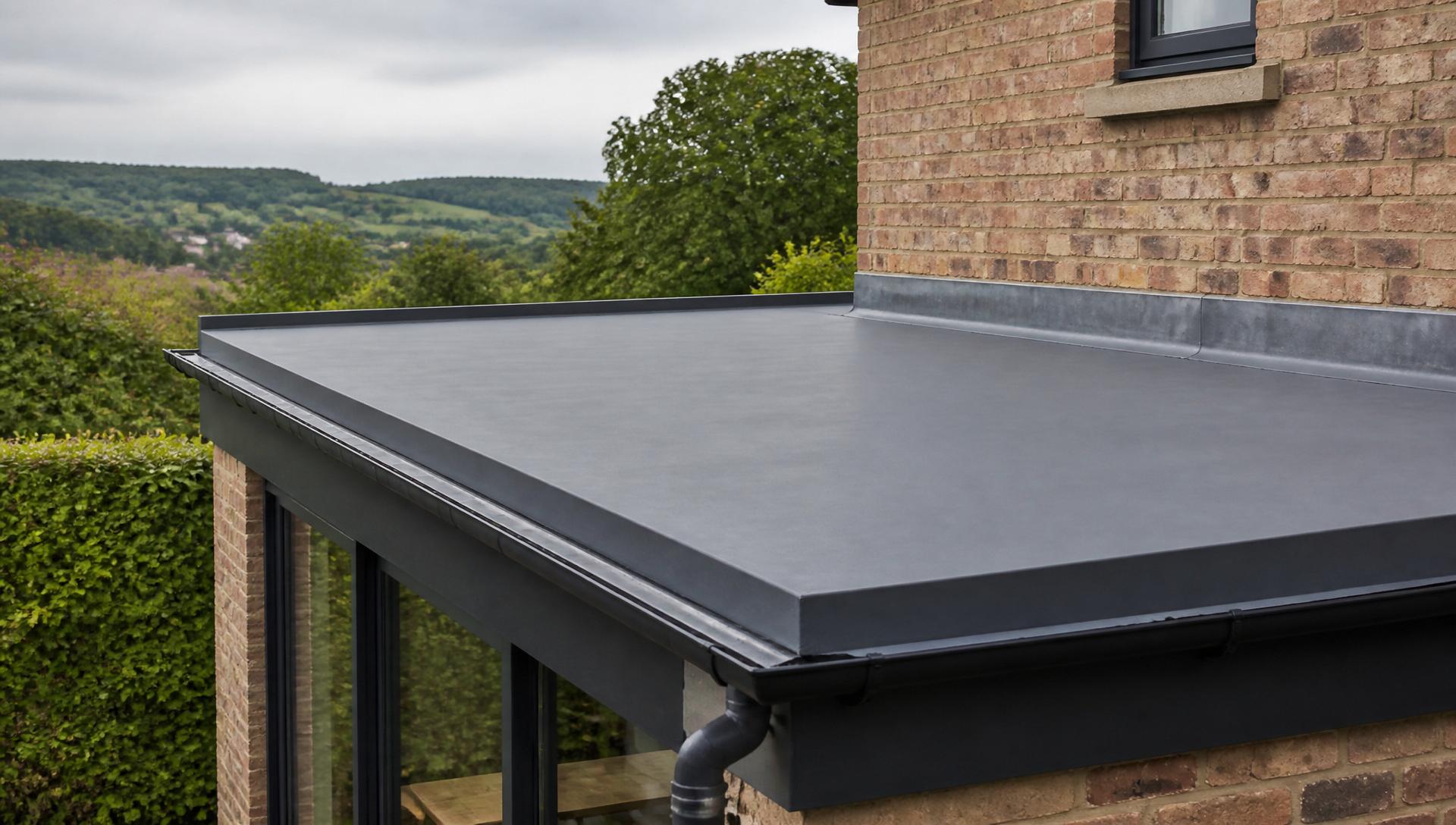
Modern flat roofing has moved well beyond old-style mineral felt. On residential work we typically specify high-performance torch-on felt systems (three-layer, polyester-reinforced), EPDM rubber membranes for garages, dormers and back additions, and GRP fibreglass laminates where a seamless, foot-trafficable finish is needed. For commercial and larger deck areas we work with single-ply membranes. Each system has a right and a wrong application, a garage roof is not a warehouse deck, and the specification changes accordingly. We recommend the system that suits the substrate, the falls, the exposure and the intended service life, and we tell you honestly when a cheaper option will cost you more inside a decade.
Repair vs full replacement
Not every failing flat roof needs stripping. A localised split, a lifted lap or a failed upstand can often be repaired properly and give another decade of service. What can't be repaired is a roof where the deck is soft underfoot, where insulation is visibly saturated, where multiple areas have failed at once, or where the falls have slumped so badly that water can never truly drain. In those cases repair is a false economy, you pay for scaffolding and access to buy months, then pay for it again. We tell you honestly which category your roof falls into after inspection.
Getting the details right
Flat roofs almost never fail in the middle. They fail at the edges, where the membrane meets the wall, the parapet, the outlet, the skylight, or the abutment with a pitched roof. Correct upstand heights (typically 150mm minimum), properly formed drip edges, welted laps, correctly bonded outlet flanges and the right flashing detail at every abutment are what separates a roof that lasts from one that leaks in the first winter. We build those details to current best practice, not shortcut them because they take longer.
Residential vs commercial work
Domestic flat roofs, extensions, dormers, porches, garages, are typically smaller, more detail-heavy, and often overlooked between building trades. Commercial roofs are larger, simpler in run, but usually have more penetrations (vents, plant, rooflights) and stricter access and safety requirements. We handle both. On commercial work we can programme around occupied premises, tenanted units and business hours where needed.
Insulation & building regulations
Any full flat roof replacement in England now triggers Building Regulations upgrades to the thermal element. That usually means adding a layer of PIR insulation to bring U-values up to current standards. We factor this into the quoted price rather than treating it as an extra, you shouldn't discover a £900 addition on day three of the job.